
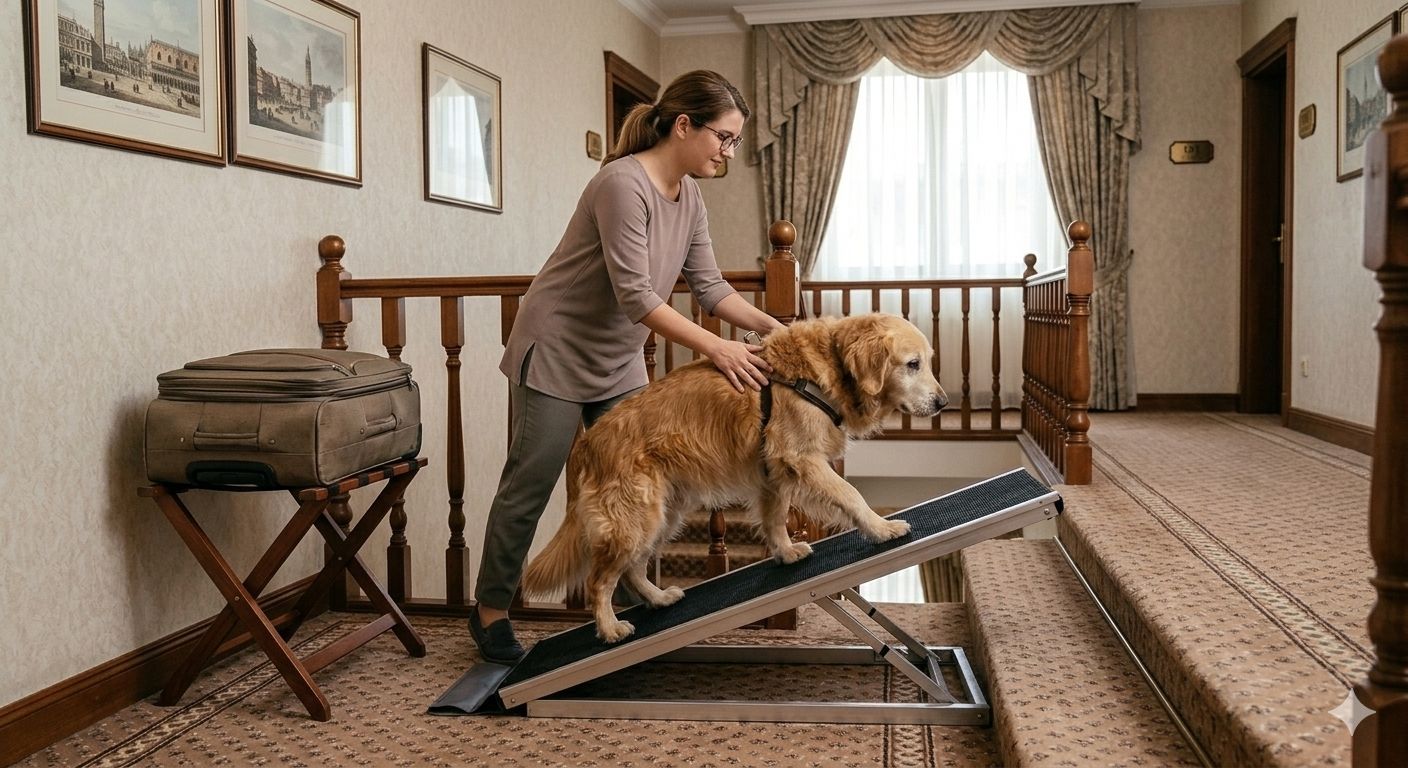
Traveling with a senior dog can be both rewarding and stressful. As a canine rehabilitation specialist, I’ve seen many older dogs move comfortably at home—thanks to ramps, rugs, and harnesses—only to struggle the moment they walk into a hotel room. High beds, slick floors, unfamiliar stairs, and tight spaces can turn a simple overnight stay into a minefield for an arthritic or mobility‑impaired dog.
Portable ramps and folding steps are some of the most practical tools you can bring on the road. The challenge is finding options that are truly travel‑friendly, safe for older joints, and realistic to carry and set up in changing environments. In this guide, we’ll walk through how to choose and use temporary ramps and steps specifically for hotel stays and other short trips—so your senior dog can stay close to you without risking painful falls.
In this Guide
- 1 Why Hotel Rooms Are Especially Hard on Senior Dogs
- 2 Key Qualities of Travel-Friendly Ramps and Steps
- 3 Ramps vs. Folding Steps on the Road: How to Choose
- 4 Using Travel Ramps for Car + Hotel (Two Problems, One Solution)
- 5 Setting Up Ramps and Steps Safely in a Hotel Room
- 6 Training Your Dog to Use Travel Aids in New Places
- 7 Special Considerations for Different Types of Senior Dogs
- 8 Cleaning and Hygiene on the Go
- 9 What to Pack in a “Mobility Travel Kit”
- 10 Common Mistakes to Avoid with Travel Ramps and Steps
- 11 Frequently Asked Questions
- 12 Final Thoughts
Why Hotel Rooms Are Especially Hard on Senior Dogs
Even if your dog is fairly stable at home, hotel environments create a perfect storm of challenges.
- High, soft beds: Many hotel beds are higher and softer than home beds, making both jumping up and landing down more dangerous.
- Slippery flooring: Laminate, tile, or low‑pile carpet can still be slick, especially near the entry or bathroom.
- Narrow spaces: Tight room layouts mean your dog has less margin for error if they wobble or misjudge a jump.
- Disrupted routine: New smells and sounds can make your dog more anxious and more likely to rush or jump without thinking.
Key Qualities of Travel-Friendly Ramps and Steps
Travel gear has to meet a different checklist than permanent home equipment. When I help clients choose portable aids, I focus on a few critical factors.
1. Lightweight but Sturdy
- You need to be able to lift and carry the ramp or steps easily—through parking lots, lobbies, and elevators.
- At the same time, it must feel absolutely solid to your dog; wobble is a fast way to lose their trust.
- Check the weight rating and aim for well above your dog’s weight for extra safety margin.
2. Compact Folding or Telescoping Design
- Look for ramps that fold or telescope down to fit in your car trunk or behind seats without dominating your luggage space.
- Folding steps should collapse flat or nest together to slide against a wall in the hotel when not in use.
- Locking mechanisms should be simple and secure—you don’t want to wrestle with complicated hardware after a long drive.
3. Versatile Height Range
- Hotel bed heights can vary widely. Your travel ramp or steps should handle both lower sofas and higher beds.
- Adjustable height or multi‑position setups are especially valuable when you can’t predict furniture height in advance.
4. Reliable, Travel-Safe Traction
- Choose surfaces with textured, non‑slip material that still grips when paws are slightly damp.
- Avoid smooth plastic that becomes slick in humid or rainy conditions.
- If needed, plan to layer a thin, washable rug or towel on top for extra grip—as long as it can be securely anchored.
Ramps vs. Folding Steps on the Road: How to Choose
Both ramps and steps can work well during travel, but certain situations favor one over the other.
When a Ramp Makes More Sense
- Your dog has significant arthritis, hip dysplasia, or spinal issues where climbing steps is painful.
- Your dog is afraid of “stair-like” structures or has previously slipped on steps.
- Hotel beds are particularly high, making shallow steps impractically tall or numerous.
When Folding Steps Are a Better Fit
- Space between the bed and other furniture is limited, and a long ramp won’t fit.
- Your dog has reasonably good joint flexion and is already comfortable using stairs at home.
- You want a very compact option that tucks away easily when not in use.
Using Travel Ramps for Car + Hotel (Two Problems, One Solution)
One of my favorite strategies is using a single ramp for both car entry and hotel bed access.
- At the car: Use the ramp at home a few times before your trip so your dog is confident loading into the vehicle.
- At the hotel: Reposition the same ramp from the car to the bed, adjusting the angle as needed.
- Advantages: Your dog is already familiar with the ramp, and you only travel with one main piece of equipment.
Setting Up Ramps and Steps Safely in a Hotel Room
Even the best travel gear becomes risky if it’s placed poorly. Here’s how I recommend setting things up once you arrive.
1. Clear the Landing Area
- Move chairs, ottomans, or luggage away from where the ramp or steps will meet the floor.
- Ensure your dog has enough room to step off the ramp and turn around without bumping into things.
2. Anchor on Both Ends
- The top of the ramp or steps should be firmly braced against the bed or sofa—no gaps where paws could slip through.
- The bottom should rest on a non‑slip surface; if the room has slick flooring, use a travel mat or bath mat underneath.
3. Test It Yourself Before Your Dog
- Press down on the ramp or steps with your hands or gently step on them yourself if weight‑rated appropriately.
- Look for wobble, bowing, or sliding. Fix issues before inviting your dog to use it.
Training Your Dog to Use Travel Aids in New Places
Even if your dog uses ramps or stairs at home, hotel environments add stress and distraction. A quick refresher helps.
Rebuild Confidence Step-by-Step
- Start with low stakes: have your dog walk up and down the ramp or steps when they’re calm, not when desperate to get on the bed.
- Use high‑value treats to reward each successful approach, step, and full ascent/descent.
- Stay patient if they’re hesitant—remember, the room smells and looks different than home.
Preventing “Shortcuts” and Jumps
- Block tempting jump routes with luggage or furniture so the ramp or steps become the obvious safe path.
- Gently guide your dog toward the ramp each time, reinforcing consistency.
- At night, consider closing the bathroom door and setting up the ramp on the same side of the bed they naturally use.
Special Considerations for Different Types of Senior Dogs
Not all senior dogs have the same needs on the road. Here’s how I tweak recommendations.
Small, Fragile Dogs (Under 15 Pounds)
- Foam steps or shorter, carpeted ramps are usually sufficient for hotel beds.
- Focus on gentle slopes and softer surfaces that are kind to tiny joints.
Medium/Large Arthritic Dogs
- Prioritize sturdier ramps with higher weight ratings and wider walking surfaces.
- Use a harness with a handle for extra support on both car and hotel ramps.
Long-Backed Breeds (Dachshunds, Corgis, Bassets)
- Always prefer ramps over stairs when possible to protect the spine.
- Keep ramp angles shallow and avoid sudden transitions or gaps between bed and ramp.
Cleaning and Hygiene on the Go
Travel gear collects dirt quickly—from parking lots, rest stops, and hotel hallways. For senior dogs with skin sensitivity or allergies, hygiene matters.
- Wipe down ramp surfaces and steps daily with pet‑safe wipes or a damp cloth.
- Consider a removable, washable cover for foam steps or ramp surfaces.
- Let equipment dry fully if it gets wet in the rain before folding it away.
What to Pack in a “Mobility Travel Kit”
Alongside ramps or steps, a few extra items can make hotel navigation easier for your senior dog.
- A lightweight non‑slip mat for under ramps or in front of the bathroom.
- A compact harness with handle for quick support in tight spaces.
- Portable, roll‑up rugs for slick hallways or long stretches of tile.
Common Mistakes to Avoid with Travel Ramps and Steps
A few patterns I see often—and how to sidestep them.
- Buying too short a ramp: This leads to steep angles that scare dogs and stress joints.
- Not practicing before the trip: Asking a dog to learn a new aid in a busy hotel lobby is a recipe for frustration.
- Ignoring lighting: Dogs often struggle more with ramps and steps at night if the room is dim.
Frequently Asked Questions
Isn’t it easier to just lift my senior dog onto the hotel bed?
Sometimes, especially for very small dogs. But repeated lifting can strain your own body, and spinal or arthritic dogs may find certain lifts painful. Ramps and steps allow safer, more independent access, especially for medium and large dogs.
My dog is fine jumping at home—do I really need travel aids?
If your dog is older and you plan to keep traveling with them, yes, I’d still encourage you to introduce aids now. Hotel beds and surfaces are unfamiliar, and one bad landing in a strange place can trigger a long‑lasting setback.
What if the ramp or steps don’t fit the hotel furniture?
Opt for adjustable designs and have a backup plan: you can create a lower sleeping area on the floor using a travel bed if the bed itself proves too awkward or unsafe to access.
Final Thoughts
With a little planning, travel doesn’t have to end when your dog becomes a senior. Temporary ramps and folding steps bridge the gap between your dog’s aging body and the very human-centric design of cars and hotel rooms. When you choose stable, travel‑friendly equipment and introduce it thoughtfully, you make it possible for your dog to stay near you—on the bed, by the window, wherever you are—without risking unnecessary pain or injury.
Each safe ascent onto a hotel bed or careful step down to the floor is one more moment of shared comfort on the road. That’s what good mobility support is really about: preserving the routines and closeness that make travel with your senior dog worth the effort.