
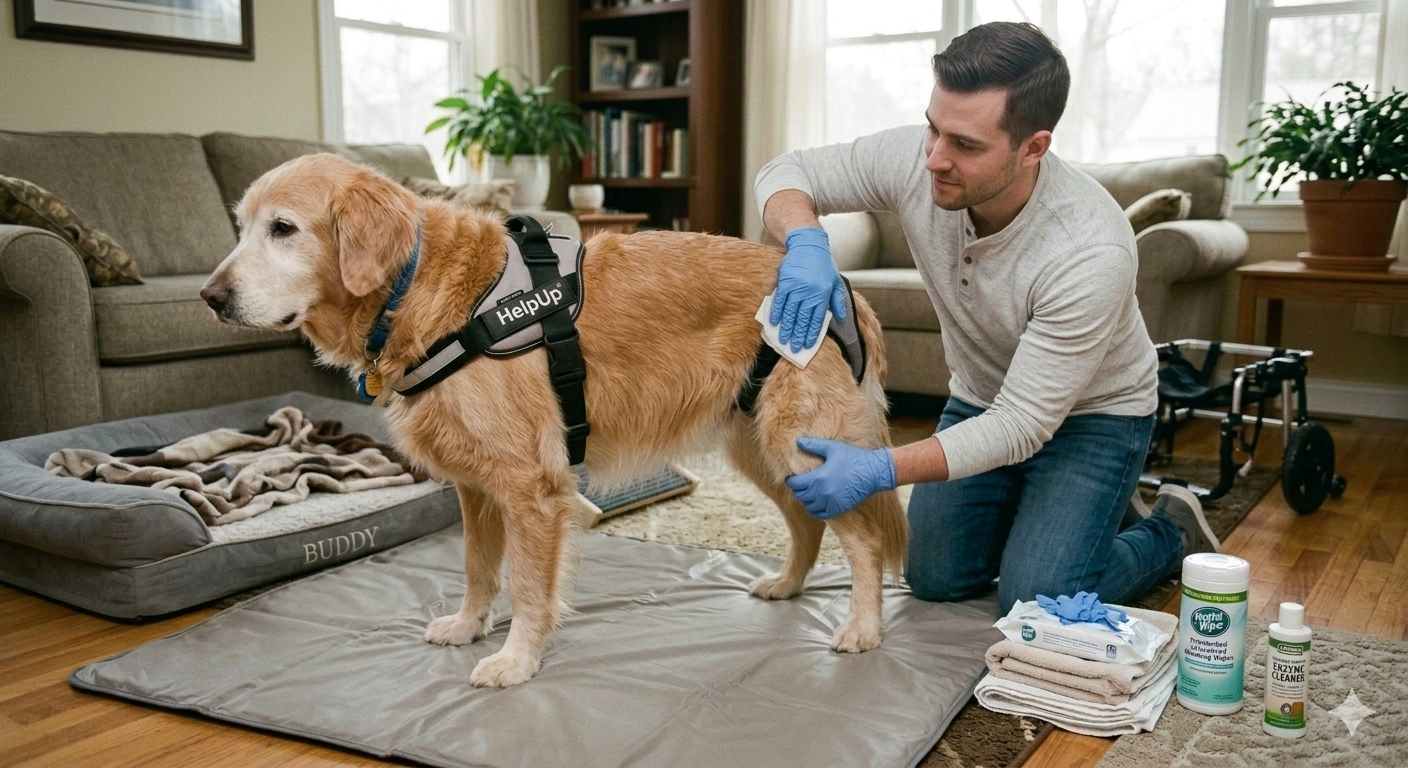
Incontinence and mobility issues frequently arrive together in senior dogs—the same neurological changes that weaken rear legs often affect bladder control, and arthritis can make positioning for toileting difficult enough that accidents become routine. Using a lift harness daily on a dog who leaks urine creates a hygiene challenge that many product reviews and buying guides simply don’t address. Here’s how to manage it practically, so the harness stays effective, odor-free, and safe for your dog’s skin.
In this Guide
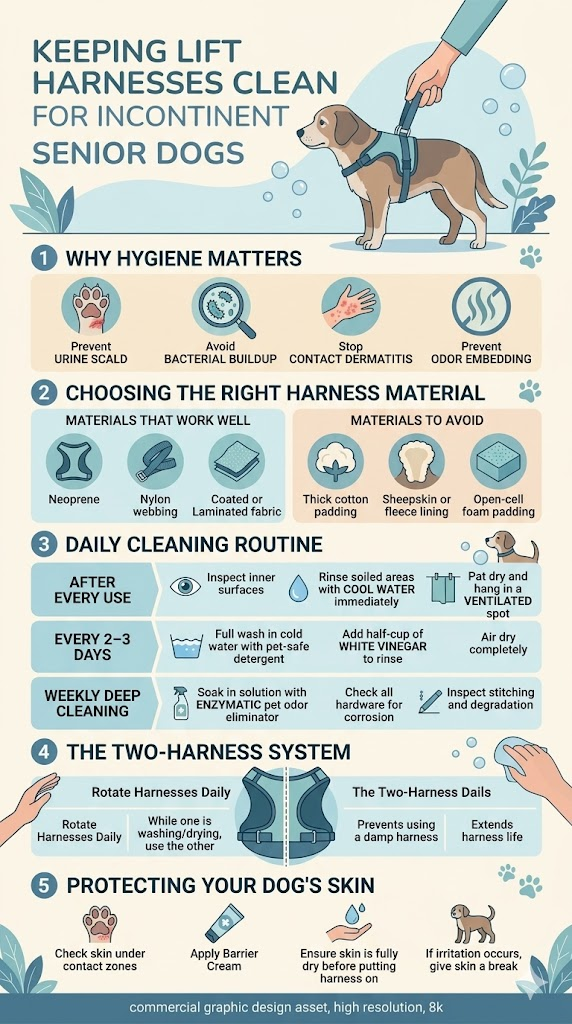
Why Hygiene Matters Beyond the Obvious
The instinct is to wash a soiled harness when it smells. The real standard needs to be higher than that, for specific reasons.
- Urine scald: Ammonia in urine irritates and breaks down skin tissue when left in contact for extended periods. A harness that sits against damp skin—even slightly damp—can cause scald in the groin, belly, and flank folds within days.
- Bacterial buildup: Harness fabric that isn’t fully dried between uses becomes a warm, moist environment for bacterial growth. The smell is a lagging indicator; bacteria are multiplying before the odor is obvious.
- Contact dermatitis: Detergent residue combined with urine residue creates a chemical irritant that can cause rashes and hot spots, particularly in dogs with thinning senior skin.
- Odor embedding: Urine odor that penetrates deep into foam padding or thick webbing becomes essentially permanent; preventing it from embedding is far easier than removing it afterward.
Choosing the Right Harness Material for Incontinent Dogs
If your senior dog is incontinent, material selection is the most important factor in harness choice—more important than brand or price.
Materials That Work Well
- Neoprene: Doesn’t absorb urine readily, dries quickly, and resists odor embedding better than fabric alternatives. Wipe-clean on the surface and machine washable. The main limitation is heat retention in warm weather.
- Nylon webbing with minimal padding: Easy to rinse under running water, dries fast, and holds up to frequent washing cycles without stretching. Less comfortable for extended daily wear but practical for targeted use on walks and stairs.
- Coated or laminated fabric: Some harnesses use a treated outer surface that repels moisture; these are worth seeking out specifically for incontinent dogs as they prevent initial absorption that makes cleaning harder.
Materials to Avoid
- Thick cotton padding: Absorbs urine immediately and holds it against the skin. Nearly impossible to fully dry between daily uses.
- Sheepskin or fleece lining: Soft and comfortable but traps urine deeply; becomes a hygiene problem within days of regular use on an incontinent dog.
- Open-cell foam padding: Soaks up liquid like a sponge; even after washing, urine odor and bacteria can persist in the core of the foam.
Daily Cleaning Routine: What “Clean Enough” Actually Means
For a harness used daily on an incontinent dog, the cleaning standard is not “wash when soiled.” It’s a daily maintenance routine with periodic deep cleaning.
After Every Use
- Inspect the inner surfaces—particularly areas around the groin, belly, and anywhere that sits close to the skin—for moisture or soiling.
- Rinse any soiled areas under cool running water immediately. Cool water prevents urine from setting into fibers; hot water bonds protein in urine to fabric.
- Pat dry with a clean towel and hang in a ventilated spot to air dry completely before the next use—not on a hook against a wall, but suspended so air circulates around all surfaces.
Every 2–3 Days
- Full wash: hand wash in cool water with a pet-safe, fragrance-free detergent, or machine wash on a gentle cold cycle in a mesh laundry bag.
- Add a half-cup of white vinegar to the rinse cycle; it neutralizes ammonia odor at the molecular level rather than masking it.
- Do not use fabric softener; it coats fibers in a way that actually helps odor embed more deeply over time.
- Air dry completely—never put back on your dog while damp.
Weekly Deep Cleaning
- Soak the harness for 15–20 minutes in a solution of cool water and an enzymatic pet odor eliminator before washing normally. Enzymatic cleaners break down urine at the protein level, which regular detergent doesn’t.
- Check all hardware: buckles, D-rings, and adjustment sliders for corrosion or residue buildup; rinse and dry these specifically.
- Inspect stitching, padding attachment points, and any velcro closures for degradation. Urine is corrosive to stitching thread over time; a harness showing fraying at seams near the contact zones should be replaced.
The Two-Harness System
For dogs who need a harness daily, owning two identical or near-identical harnesses and rotating them is one of the most practical changes you can make.
- While one is washing and drying (which should be a full 12–24 hours for complete drying), the second is in use.
- This prevents the common pattern of re-using a harness before it’s fully dry because “it’s just slightly damp” and there’s nothing else available.
- Over time, rotation also extends the life of each harness significantly compared to using a single one daily.
Protecting Your Dog’s Skin Under the Harness
Even with excellent harness hygiene, daily harness use on a dog with incontinence requires attention to the skin underneath.
- Check skin under all harness contact zones daily: groin, belly, flanks, and around the chest straps. Look for redness, irritation, hair loss, or moisture.
- Apply a thin layer of barrier cream or protective balm to the groin and belly folds before harness use if your dog has any tendency to skin irritation; this creates a buffer between damp skin and harness material.
- Never put a harness directly onto wet or recently cleaned skin—even clean moisture trapped under a harness can cause irritation. Pat skin fully dry first.
- If redness or irritation appears, give the skin a day without the harness if possible and address the underlying moisture issue before resuming.
Storage Between Uses
Where and how you store the harness between washes affects odor control.
- Hang—never fold or pile—the harness so all surfaces are exposed to air between uses.
- Don’t store near other pet bedding, towels, or fabric items that absorb odors; harnesses stored in closed compartments or drawers develop musty odor faster.
- A dedicated hook near the door in an open, ventilated area is ideal; it also keeps the harness accessible for quick use, which encourages consistent use rather than skipping it on busy days.
When to Replace Rather Than Clean
Even with excellent maintenance, harnesses have a functional lifespan that incontinence shortens significantly.
- Persistent odor despite proper enzymatic cleaning indicates the material has been saturated beyond recovery; replace at this point.
- Any degradation in stitching, fraying of webbing, or cracking of buckles is a safety issue regardless of hygiene; a harness supporting a mobility-compromised dog must be structurally reliable.
- Visible discoloration of padding or lining that doesn’t wash out indicates deep material saturation that won’t improve with further cleaning.
A well-maintained harness used on an incontinent senior dog typically needs replacing every 4–6 months with daily use—factor that into your planning rather than waiting for an obvious failure point.