
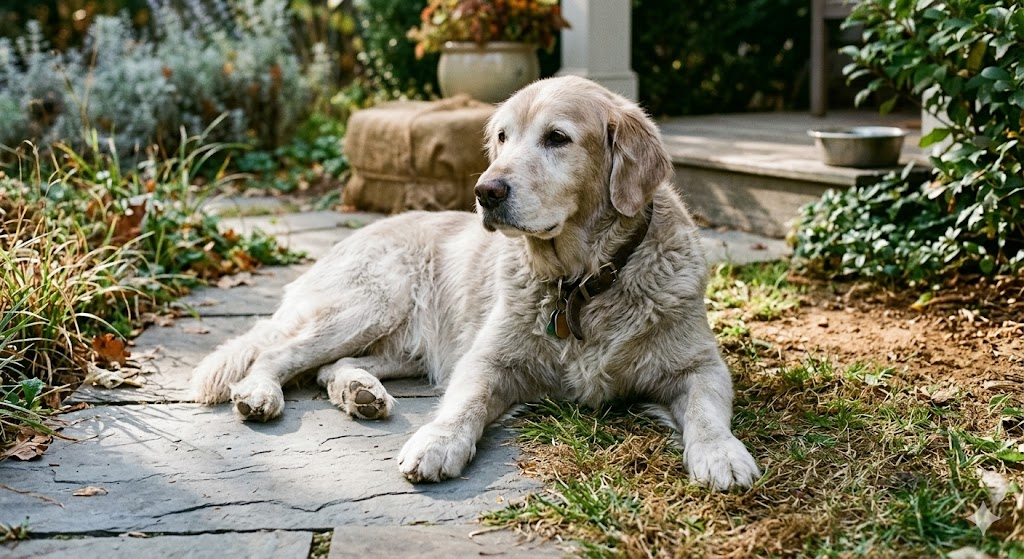
Ageing joints already make every step a little harder for your dog; add icy pavements or burning hot sidewalks and suddenly simple toilet breaks feel risky. Seasonal paw care isn’t just about comfort. Managing ice, snow, and summer heat directly affects traction, pain levels, and how willing your senior dog is to move at all.
In this Guide
- 1 Why Seasonal Conditions Hit Senior Paws Harder
- 2 Winter: Ice, Snow, and Road Salt
- 3 Training and Using Winter Paw Gear
- 4 Summer: Hot Pavement and Rough Surfaces
- 5 Managing Seasonal Allergies Through Paw Care
- 6 Indoor Seasonal Adjustments
- 7 Seasonal Checklists You Can Actually Use
- 8 When to Involve Your Vet
Why Seasonal Conditions Hit Senior Paws Harder
Older dogs are more vulnerable to both cold and heat at ground level, and their paws often give you the first warning signs.
- Arthritis and reduced circulation make senior paws more sensitive to temperature extremes, so icy or hot surfaces feel sharper and more painful than they did years ago.
- Nerve changes and muscle weakness reduce how quickly they can correct a slip, so losing traction on ice or wet tile turns into a fall more often.
- Dry, cracked pads are common in older dogs and split more easily when exposed to salt, ice, or hot pavement, making every step sting.
Thinking about “paw climate” all year long is one of the simplest ways to support mobility without changing anything dramatic in your routine.
Winter: Ice, Snow, and Road Salt
Winter paws face three main problems: lost traction, chemical irritation, and deep chilling of already stiff joints.
Protecting Traction on Ice and Packed Snow
On ice, your dog’s paws behave a lot like your shoes—once they slide, momentum takes over. A few basic changes reduce that risk.
- Keep winter walks short and purposeful on the worst days, focusing on safe toilet access rather than distance.
- Use grippy winter booties with textured rubber soles when your dog tolerates them; they add friction and also provide a barrier against cold and salt.
- If booties are a hard “no,” apply a paw wax before each outing. Wax slightly improves grip and adds a protective film against ice, salt, and wet.
- Choose flatter, well-trodden routes over steep or uneven paths; even a healthy dog can’t “muscle through” a sheet of ice.
Dealing with Salt, De-icers, and Chemical Irritants
Road salt and de-icing products are harsh on senior paws and can steadily eat away at pad health if you don’t neutralize them.
- Wipe paws with a warm, damp cloth as soon as you come inside—don’t wait. Pay special attention between toes and around nails.
- Keep a small paw rinse bowl near the door for bad-weather days so you can dip each paw quickly before drying.
- Apply a paw balm once paws are dry to restore moisture and repair minor cracks caused by salt and cold.
- If you use de-icer on your own steps or driveway, choose a pet-safe product formulated to be gentler on paw pads.
Managing Cold and Stiffness from the Ground Up
Cold from the ground travels up through paws into joints, especially in small or lean dogs.
- Use a coat or sweater for thin-coated seniors so their whole body stays warmer and paws don’t have to “fight” cold alone.
- Keep winter walks closer to home and add more frequent, shorter outings instead of one long, freezing trek.
- Have a warm, supportive orthopedic bed ready near the door so your dog can lie down and re-warm quickly after coming inside.
Training and Using Winter Paw Gear
Booties and wax are only helpful if your dog actually tolerates them.
- Introduce booties indoors first, one paw at a time, rewarding heavily for calm standing and a few steps.
- Keep early sessions very short—two to three minutes—and remove them before your dog becomes frantic about getting them off.
- For wax, let your dog sniff the tin, then gently massage a small amount into each pad while they relax on a mat or bed. Pair with calm praise so it feels like a spa routine rather than a restraint.
- If your dog absolutely refuses booties, commit to wax plus careful route selection and shorter winter walks instead of forcing the issue.
Summer: Hot Pavement and Rough Surfaces
In summer, the main threats flip: less slipping, more burning and abrasion.
Checking Surface Temperature Safely
Senior dogs may not lift their paws quickly even when they burn, especially if mobility is already limited.
- Use the 5-second hand or bare-foot test on pavement or sand: if you can’t comfortably keep your skin there for five seconds, it’s too hot for your dog’s pads.
- Walk in the coolest parts of the day—early morning and late evening—whenever you can.
- Prioritize grass, dirt paths, or shaded routes over blacktop and concrete, which hold and radiate heat.
Protecting Pads from Heat and Wear
Older pads are thinner, drier, and more prone to cracking. That matters on abrasive or hot surfaces.
- Use lightweight, breathable booties designed for summer conditions when you can’t avoid hot or rough terrain. Look for mesh uppers and thin, flexible rubber soles.
- Apply a paw balm at night to keep pads supple; soft doesn’t mean weak—properly moisturized pads flex rather than crack under stress.
- Trim excess fur between toes. Long hair traps grit and heat and can cause matting that changes how the paw lands.
Managing Seasonal Allergies Through Paw Care
Seasonal grasses, pollens, and molds often collect on paws and trigger itching that leads to chewing and licking.
- In high-allergy seasons, rinse or wipe paws after walks even if they’re clean—this removes pollen and dust as well as dirt.
- Watch for redness, staining, or chewing between toes; these are early signs of allergy-related irritation that can make walking uncomfortable.
- Use a hypoallergenic paw wipe (without heavy fragrance or alcohol) for daily clean-up.
Indoor Seasonal Adjustments
It’s not just the outdoors that changes with the seasons—your floors do too.
- In winter, indoor air is drier; this dries pads faster. Increase paw balm use and check for cracks weekly.
- In summer, more open windows mean dust and pollen settle on floors, making already-slippery surfaces even slicker—vacuum and mop more frequently in walk paths.
- Rotate or wash non-slip rugs and runners more often when roads are wet or dusty; dirty rug surfaces offer less traction.
Seasonal Checklists You Can Actually Use
Rather than trying to remember everything, use simple seasonal checklists.
Winter Paw Care Checklist
- Short, purposeful walks; avoid steep or untreated icy routes.
- Paw wax or booties on before every outing in snow or ice.
- Paw rinse and thorough dry after each walk.
- Paw balm at night to repair salt and cold damage.
- Warm bed and coat ready for quick re-warming.
Summer Paw Care Checklist
- Walks only during cooler parts of the day.
- Grass and shade preferred over pavement and sand.
- Surface heat test before each walk.
- Nightly paw balm to prevent dry cracking.
- Regular trimming of paw hair and nails for good contact.
When to Involve Your Vet
Paw problems are often dismissed as “just dry pads,” but they can derail mobility entirely if ignored.
- See your vet if you notice deep cracks, bleeding, limping, or persistent licking at the paws despite reasonable care.
- Ask for guidance if your senior has diabetes, immune issues, or poor circulation; their paws are slower to heal and may need medicated products rather than general balms.
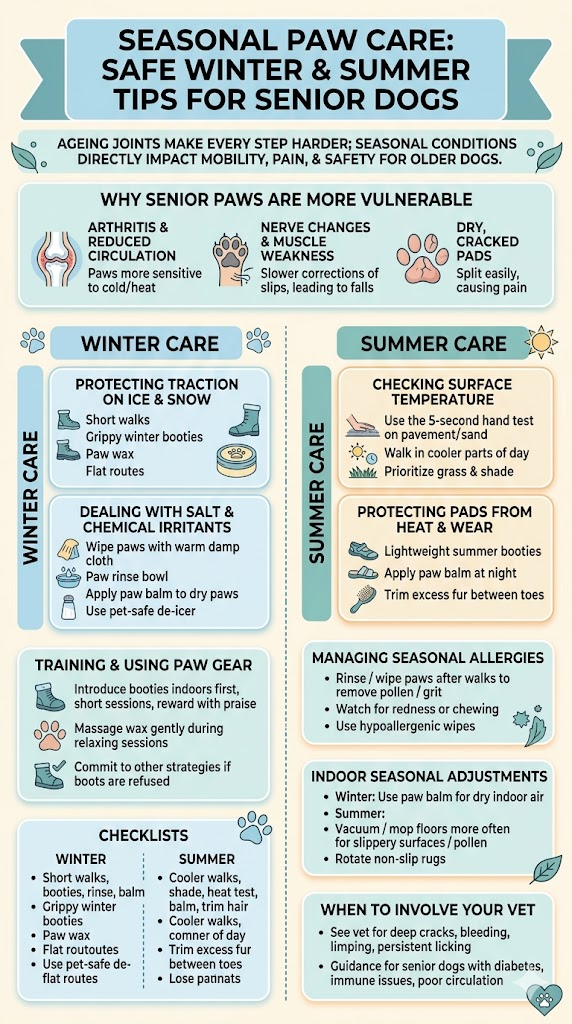
When you manage winter ice and summer heat thoughtfully from the paw up, you remove two of the biggest seasonal barriers to movement—letting your senior dog keep enjoying safe, comfortable walks all year long.