
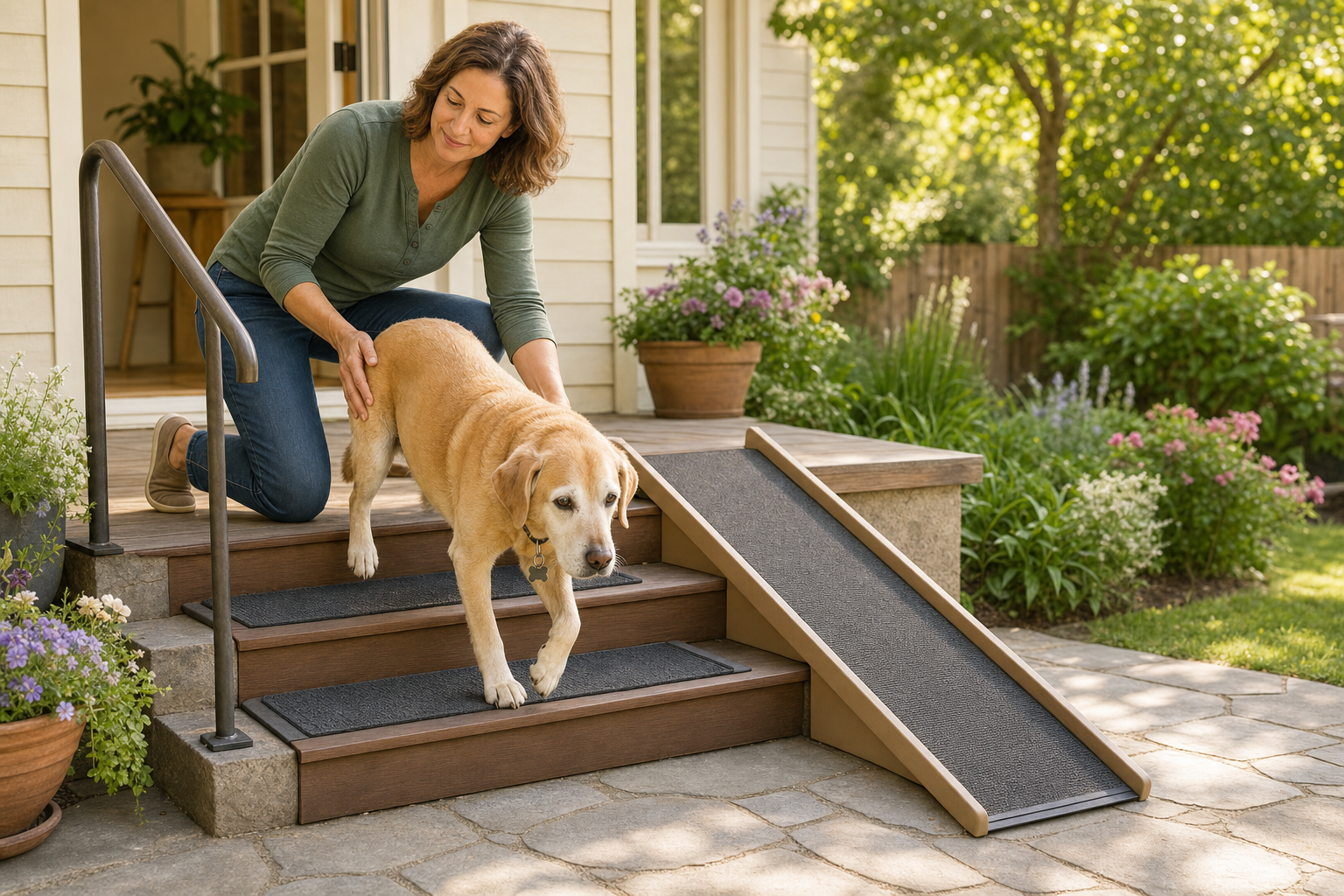
Many families work hard to make the inside of the home safer for their senior dog, but the real trouble starts the moment you step outside. A single porch step, a slippery deck, or an uneven path to the yard can turn a simple bathroom break into a risky event for an older dog with arthritis, weakness, or poor balance. As a canine rehabilitation specialist, I’ve seen more than a few injuries that “just happened on the way to pee.”
The good news is that you don’t need to redesign your entire property to make outdoor access safer and easier. With a combination of small structural changes, portable aids, and better traction, you can significantly reduce the stress and risk your dog faces just getting to the grass and back.
In this Guide
- 1 Why Outdoor Access Becomes Harder with Age
- 2 Assessing Your Current Outdoor Route
- 3 Solutions for Single or Double Porch Steps
- 4 Decks, Patios, and Slippery Surfaces
- 5 Managing Slopes and Uneven Ground in the Yard
- 6 Adapting Access for Different Mobility Levels
- 7 Lighting and Visibility for Nighttime Trips
- 8 Weather-Specific Strategies
- 9 Using Harnesses and Slings Outdoors
- 10 Creating an “Emergency Plan” for Bad Days
- 11 When Structural Changes Might Be Worth It
- 12 Frequently Asked Questions
- 13 Final Thoughts
Why Outdoor Access Becomes Harder with Age
Outdoors, your dog is often dealing with several challenges at once.
- Hard, unforgiving surfaces: Concrete and stone don’t cushion impact like carpeted indoor floors.
- Weather and moisture: Rain, dew, and ice turn steps and ramps into slick hazards.
- Uneven terrain: Yards can have holes, roots, slopes, and loose gravel that challenge weak joints and muscles.
- Urgency: Dogs going out to relieve themselves may rush, which makes missteps more likely.
Assessing Your Current Outdoor Route
Before you start buying ramps or making changes, walk through the exact path your dog takes to go outside and ask yourself a few questions.
- How many steps are there between indoors and the yard? Are they tall, shallow, or uneven?
- What surfaces do they cross (wood deck, concrete, tile, grass, gravel)?
- Where do they tend to slip, hesitate, or rush?
- Is the area well lit at night when many bathroom trips happen?
Taking photos or a short video of your dog using the current setup can help you (and your vet or rehab therapist) see exactly where they’re struggling.
Solutions for Single or Double Porch Steps
Single or double steps are a common trouble spot—just tall enough to be a strain, but often overlooked because they seem “small” to us.
Option 1: Portable or Fixed Ramps
- A short outdoor-rated ramp can turn one or two steps into a gradual incline.
- Look for non-slip surfaces designed to withstand moisture and temperature changes.
- Secure the top of the ramp so it doesn’t slide off the step edge, and consider railings or side guides if your dog tends to veer.
Option 2: Extra “Intermediate” Steps or Platforms
- If a ramp won’t fit, adding a sturdy, wide platform or extra step can make a tall step into two lower ones.
- Ensure the new platform has a non-slip surface and is wide enough for your dog to stand comfortably.
Option 3: Traction Add-Ons
- Non-slip stair tread strips can dramatically improve grip on existing stone, concrete, or wood steps.
- Use outdoor-rated products that hold up to rain and temperature swings.
Decks, Patios, and Slippery Surfaces
Wooden decks and smooth concrete patios become particularly treacherous when wet.
- Consider outdoor rugs or rubber matting to create a non-slip pathway from the door to the yard or ramp.
- Place mats at the door threshold and at the top and bottom of any ramp or stair set.
- Keep moss, algae, and debris cleared regularly; organic buildup makes surfaces slick even when “dry.”
Managing Slopes and Uneven Ground in the Yard
Senior dogs often manage flat surfaces reasonably well but struggle where ground tilts or changes under their feet.
Leveling High-Use Areas
- If possible, flatten a small “bathroom zone” close to the door by filling holes and smoothing out ridges.
- Use compacted, dog-safe materials (like packed fine gravel or stable pavers) rather than loose stones that roll underfoot.
Creating Defined Paths
- Lay out a wide, stable path from the porch to your dog’s favorite potty spot.
- Use pavers, rubber tiles, or stabilized gravel, and border it so the edges are clear.
- A defined path gives senior dogs a “default” route that’s predictable and secure.
Adapting Access for Different Mobility Levels
Not all senior dogs need the same outdoor modifications. Here’s how I often adapt based on ability.
Mild Mobility Issues
- Add non-slip treads to existing steps and outdoor mats at key points.
- Limit unnecessary stair use by taking the closest, flattest route possible.
- Use a standard harness for better control when they’re excited.
Moderate Mobility Issues (Arthritis, Some Weakness)
- Install a short ramp over one or two porch steps.
- Use a rear support or full-body harness to assist on slopes or uneven areas.
- Shorten the distance to the bathroom area if possible to reduce fatigue.
Severe Mobility Issues (Frequent Slipping, Very Weak)
- Bring the bathroom area closer—sometimes onto an artificial grass pad on the deck or just outside the door.
- Use a full-body harness or sling for most outdoor trips; consider a cart in some cases on vet recommendation.
- Reduce the number of outdoor trips by timing them around meals, water, and medications.
Lighting and Visibility for Nighttime Trips
Most seniors go out early in the morning and late at night, when visibility is poorest.
- Install motion-activated or low-level lights along steps, ramps, and paths.
- Ensure light is even—harsh contrast between bright and dark areas can confuse older eyes.
- Reflective strips on ramp edges or step borders can help dogs see where surfaces begin and end.
Weather-Specific Strategies
Outdoor safety changes with the seasons; your approach should too.
Rainy Conditions
- Use textured ramp surfaces that maintain grip when wet.
- Consider non-slip dog booties for dogs who are especially cautious or prone to slipping.
- Wipe paws when coming in to remove mud that will later make indoor floors slippery.
Snow and Ice
- Shovel and de-ice a specific pathway for your dog; use pet-safe ice melts.
- Cover ramps with additional traction like removable outdoor treads in winter.
- Limit time on icy surfaces, even with booties, and rely more on cleared, flat areas.
Hot Weather
- Check patio and ramp surfaces with your hand; if it’s too hot to touch, it’s too hot for paws.
- Provide shaded paths and a shaded bathroom area to reduce heat stress.
Using Harnesses and Slings Outdoors
Harness support outdoors is often more crucial than indoors because falls can be harder and footing less predictable.
- Use a well-fitted harness with a handle over the shoulders or hips for quick support if your dog stumbles.
- For stairs or ramps, keep a light upward tension to help them feel secure.
- Practice using the harness calmly indoors first so your dog doesn’t associate it with only urgent bathroom trips.
Creating an “Emergency Plan” for Bad Days
Some days, your dog’s mobility will be worse due to weather, pain flares, or fatigue.
- On those days, use the shortest, flattest route—possibly to a closer potty area or pad.
- Increase hands-on support with a harness or sling, even if they usually manage alone.
- If stepping outside at all becomes very difficult, discuss indoor potty options with your vet temporarily.
When Structural Changes Might Be Worth It
For some families, especially those planning to stay in their home long-term, investing in more permanent modifications can be worthwhile.
- Replacing multiple porch steps with a graded ramp.
- Rebuilding narrow or steep outdoor stairs into wider, shallower steps.
- Designing a small, level “senior dog zone” in the yard with secure footing and easy access.
Frequently Asked Questions
My dog only has one or two steps to the yard—is that really a big deal?
It can be, especially for dogs with hip, knee, or back problems. One or two tall steps may be harder than a longer, gentler staircase. If you notice hesitating, stumbling, or jumping up instead of stepping, it’s time to help.
Should I carry my dog instead of using ramps or steps?
Sometimes, especially for very small dogs or in emergencies. But for many seniors, a mix of safe independence (with ramps/steps) plus occasional carrying on bad days gives the best combination of mobility and safety.
What if my yard is very uneven and I can’t change it?
Create at least one safe, predictable path and one level bathroom area. You don’t have to fix the whole yard; focus on the routes your dog uses daily and the spots where they actually stand.
Final Thoughts
Outdoor steps and yard access are easy to overlook until your senior dog begins to struggle. But once you start seeing the route through their eyes—a stiff hip, a wobbly knee, a back that doesn’t bend like it used to—it becomes clear how much these seemingly small obstacles matter.
By combining ramps or additional steps, better traction, thoughtful lighting, and strategic use of harness support, you can transform those daily trips outside from “something to endure” into something your dog can manage with relative ease. It’s not about bubble-wrapping their world; it’s about quietly reshaping it so their aging body doesn’t have to fight so hard just to reach the grass.