
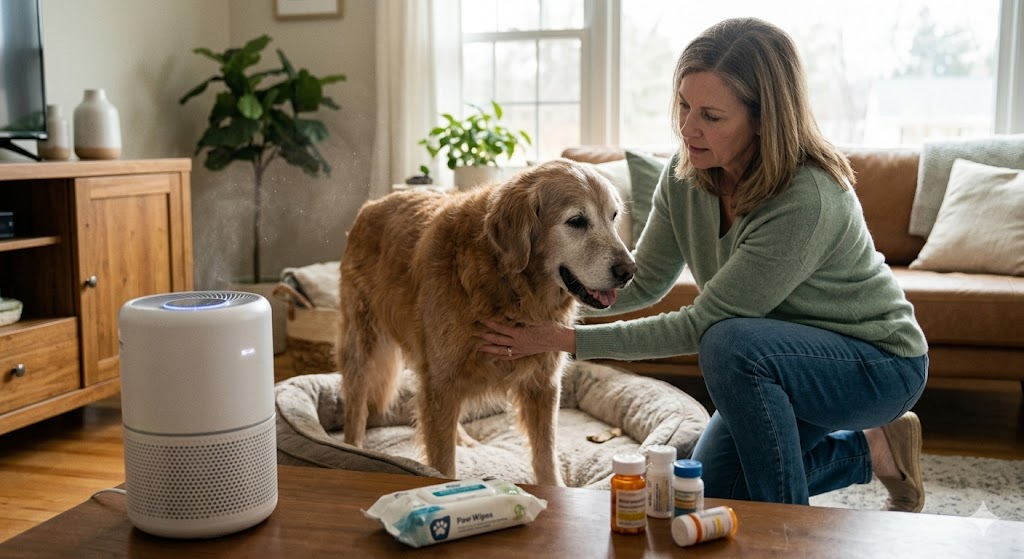
When we talk about senior dog mobility, we usually focus on joints, muscles, and obvious things like slippery floors or stairs. But as a canine rehabilitation specialist, I’ve also seen less obvious factors quietly undermine an older dog’s ability to move comfortably—especially dust, allergies, and overall air quality in the home.
You might not connect sneezing, licking paws, or mild coughing with your dog’s difficulty getting up or walking. Yet for some seniors, these “background” issues increase inflammation, disrupt sleep, make breathing harder, and even change how willing they are to move. This guide will walk you through how environmental irritants affect mobility, what signs to watch for, and practical ways to improve your home’s air quality to support your dog’s comfort.
In this Guide
- 1 How Allergies and Air Quality Affect Mobility
- 2 Common Household Irritants for Senior Dogs
- 3 Signs That Allergies or Air Quality Are Affecting Your Senior Dog
- 4 How Itchy Paws and Skin Directly Change Gait
- 5 Improving Indoor Air Quality for Senior Dogs
- 6 Optimizing Bedding and Rest Areas
- 7 Flooring, Cleaning Products, and Mobility
- 8 Managing Seasonal Allergies to Protect Mobility
- 9 Respiratory Issues and Exercise Tolerance
- 10 Creating a “Low-Irritant Zone” for Your Senior Dog
- 11 Working with Your Veterinary Team
- 12 Frequently Asked Questions
- 13 Final Thoughts
How Allergies and Air Quality Affect Mobility
At first glance, breathing and skin might seem separate from joints and muscles. In reality, they’re deeply connected.
- Systemic inflammation: Allergies and chronic exposure to irritants can increase the overall inflammatory burden in the body—including in joints.
- Sleep disruption: Itchy skin, sneezing, or nighttime coughing can fragment sleep, leaving seniors tired and less able to tolerate activity.
- Breathing effort: Dogs with compromised airways (allergies, chronic bronchitis, collapse) may avoid walking simply because breathing feels hard.
- Behavior changes: A dog who feels constantly itchy or congested may be more anxious, less cooperative, and less willing to exercise.
Common Household Irritants for Senior Dogs
Many older dogs develop new sensitivities or see existing ones worsen over time.
Dust and Dust Mites
- Dust accumulates in carpets, bedding, upholstery, and vents.
- Dust mites and their droppings are a frequent trigger for skin and respiratory allergies.
Indoor Air Pollutants
- Cleaning chemicals, scented candles, air fresheners, and smoke can all irritate airways.
- Cooking fumes and poor ventilation in small spaces may also contribute.
Outdoor Allergens That Ride Indoors
- Pollen, mold spores, and outdoor dust cling to fur, paws, and your clothing, then spread through the home.
- For some seniors, these seasonal factors clearly change how they move and feel.
Signs That Allergies or Air Quality Are Affecting Your Senior Dog
These signs often show up alongside mobility changes but get written off as “just allergies.”
- Increased paw licking or chewing, especially after walks or in certain rooms.
- Redness or recurrent infections between toes—painful enough to change gait.
- Frequent sneezing, reverse sneezing, or mild coughing indoors.
- Rubbing face or ears on carpets, furniture, or bedding.
- Seeming more lethargic or reluctant to move on high-allergen days.
How Itchy Paws and Skin Directly Change Gait
Paw and skin discomfort can subtly but significantly alter how your dog moves.
- Dogs may tiptoe or avoid fully loading a paw that feels itchy, sore, or inflamed, putting more stress on other limbs.
- Constant licking can lead to raw areas that hurt when they contact the floor, especially hard surfaces.
- Over time, these compensations can exacerbate arthritis and muscle strain.
Improving Indoor Air Quality for Senior Dogs
You don’t need a full renovation to make a meaningful difference in your dog’s environment.
Increase Filtration and Ventilation
- Use a HEPA-grade air purifier in the rooms where your dog spends the most time, especially sleeping areas.
- Change HVAC filters regularly and choose higher-quality filters rated for allergen reduction if your system allows.
- Air out your home when outdoor air quality permits: short, regular openings of windows can help reduce indoor pollutant buildup.
Reduce Dust Reservoirs
- Vacuum carpets and rugs with a vacuum that includes a HEPA filter to trap fine particles.
- Dust surfaces with damp cloths instead of dry ones to avoid redistributing particles.
- Wash curtains, throw blankets, and soft dog toys regularly.
Optimizing Bedding and Rest Areas
Your dog spends a large portion of the day on their bed; it’s a key target for air quality improvements.
- Choose orthopedic beds with removable, machine-washable covers; wash them frequently with fragrance-free detergent.
- Consider hypoallergenic covers or mattress protectors to reduce dust mite accumulation.
- Keep bedding slightly elevated away from heating vents or drafty windows where irritants accumulate.

Flooring, Cleaning Products, and Mobility
The products you use to clean the floors your dog walks on can influence both traction and respiratory comfort.
- Use pet-safe, low-odor cleaning solutions; harsh fumes can irritate airways, especially in senior dogs who lie close to the floor.
- Avoid waxes or polishes that make floors extra shiny and slippery; they increase fall risk.
- After mopping, allow extra drying and ventilation time before letting your dog walk over the area.
Managing Seasonal Allergies to Protect Mobility
If you notice your dog’s mobility or comfort worsens during certain seasons, allergies may be amplifying joint issues.
Practical Seasonal Steps
- Wipe paws and legs after outdoor walks to remove pollen and dust before they spread indoors.
- Consider indoor-only days or shorter outdoor time when pollen counts are extremely high.
- Ask your veterinarian about allergy management options that are safe for seniors (medications, supplements, or special shampoos).
Respiratory Issues and Exercise Tolerance
Older dogs with chronic airway problems often move differently when air quality is poor.
- They may slow down sooner, pant heavily, or avoid lying flat due to breathing discomfort.
- Poor air increases the “cost” of every step; tasks like stairs or long hallways become more taxing.
In those cases, pacing activity and improving indoor air can be as important as joint support.
Creating a “Low-Irritant Zone” for Your Senior Dog
One effective strategy is to designate at least one room as a sanctuary with the cleanest air and surfaces.
- Use an air purifier, washable bed, and minimal dust-collecting clutter in this space.
- Keep scented products, aerosols, and smoke completely out of this area.
- Encourage your dog to rest there, especially on days when allergies or breathing seem worse.
Working with Your Veterinary Team
Environmental changes are powerful, but they work best alongside appropriate medical care.
- Tell your vet if you notice patterns: “She moves worse on high-pollen days,” or “He coughs more when the heater runs.”
- Ask whether allergy testing, medications, or other diagnostics are appropriate for your dog’s age and health.
- If your dog has known lung or heart disease, discuss safe exercise levels and how air quality may affect them.
Frequently Asked Questions
Can improving air quality really change how my senior dog moves?
For some dogs, yes—especially those whose allergies or respiratory issues are significant. You might not see dramatic changes in joint structure, but you can see better stamina, less restlessness, and more willingness to move.
Do air purifiers actually help dogs, or are they just for people?
They can benefit both. Reducing particles like dust, dander, and pollen helps any breathing creature in the home—including your dog, particularly if they sleep near the purifier.
Is it worth focusing on this if my dog already has bad arthritis?
Arthritis doesn’t exist in isolation. Anything that reduces overall inflammation, improves sleep, and makes breathing easier can support better quality of life and activity tolerance alongside joint-focused care.
Final Thoughts
Dust, allergies, and air quality are easy to overlook when you’re focused on visibly painful joints or obvious mobility challenges. Yet for many senior dogs, these “background” factors quietly shape how much energy they have, how well they sleep, and how comfortable they feel moving through your home.
By paying attention to the air your dog breathes and the surfaces they lie on—not just the floors they walk on—you create a more forgiving environment for an aging body. It’s another layer of support, invisible but meaningful, that helps every step and every breath cost just a little less effort.